
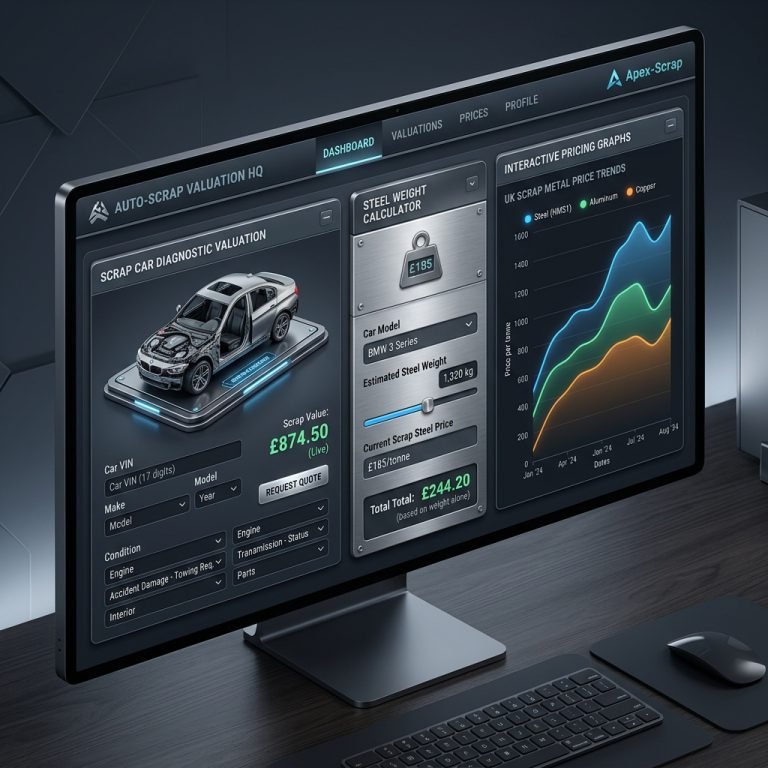
When it is time to part ways with a junk, damaged, or non-running vehicle, the first question most Ontario owners ask is: “How much cash can I get for my scrap car?” While you might hear stories of people getting anywhere from $300 to several thousand dollars, the actual pricing structure is not arbitrary. Auto wreckers and salvage yards calculate vehicle value based on a highly precise set of variables. Understanding these factors will help you negotiate a fair price and avoid low-ball offers.
The Core Components of Scrap Car Valuation
Contrary to popular belief, auto wreckers do not value a scrap vehicle based on its historical brand prestige or cosmetic beauty. Instead, the value is calculated using three primary criteria: the weight of recyclable metal, the presence of precious metals in the emissions system, and the salvage value of intact mechanical parts.
1. The Heavy Metal Factor: Curb Weight and Steel Content
The single most important baseline factor in any scrap car value calculator is the vehicle’s **curb weight**. When a car is completely crushed and recycled, it is sold by the ton to steel mills and metal smelters. The heavier your vehicle, the more raw steel and iron it contains, leading to a higher payout.
- Compact Cars & Sedans: Typically weigh between 1.0 to 1.5 metric tons, yielding a standard baseline payout.
- Mid-size SUVs & Crossovers: Generally weigh between 1.6 to 2.2 metric tons, commanding a mid-range pricing scale.
- Full-size Trucks & Large Vans: Often exceed 2.5 metric tons, receiving premium top-tier payouts due to heavy steel chassis frames.
2. The Goldmine: The Catalytic Converter
If you have ever wondered why a small, light car can sometimes fetch a higher scrap payout than a larger vehicle, the answer lies in the **catalytic converter**. The catalytic converter is an emissions control device installed in the exhaust system of gasoline and diesel vehicles. It contains trace amounts of extremely precious metals, including:
- Platinum: Extremely heat-resistant and highly valuable.
- Palladium: Used to filter carbon monoxide and other toxic gases.
- Rhodium: One of the rarest and most expensive metals in the world.
Auto wreckers have specialized catalogs to look up the exact value of your vehicle’s original catalytic converter based on its serial number. An intact, original factory catalytic converter can double the cash value of your scrap car. If the converter has been replaced with an aftermarket version (which contains very few precious metals) or has been cut out entirely, your payout will drop significantly.
3. Salvageable High-Demand Auto Parts
If your vehicle is relatively modern but was written off due to a minor collision or a failed safety test, it may still possess valuable, high-demand mechanical parts. Wreckers will evaluate the resale potential of key components, including:
- The engine assembly and transmission system.
- Alloy wheels and brand-new tires.
- Electronic control modules (ECUs), starters, and alternators.
- Body panels, intact headlights, and interior seats.
If these parts can be cleaned, cataloged, and resold on the used auto parts market, wreckers will add a premium to your cash offer, going far beyond the basic scrap metal weight value.
The Impact of Global Metal Commodity Markets
Scrap car pricing is not static—it fluctuates daily based on global metal commodity markets. Auto salvage operations monitor metal indexes such as the London Metal Exchange (LME). When global demand for iron ore, copper, and aluminum rises, steel mills pay more for shredded auto scrap, and local salvage yards can pass those profits to consumers.
Conversely, if there is a surplus of raw steel or a drop in global construction activity, local scrap car payouts in Toronto, London, and Hamilton will naturally decrease. Read more about how these financial trends affect you in our deep dive on the impact of global steel markets on Ontario scrap payouts.
Estimated Scrap Value Ranges in Ontario
While values change constantly, here is a general breakdown of what to expect for junk cars in Ontario based on condition and completeness:
| Vehicle Condition | Approximate Payout Range | Key Pricing Driver |
|---|---|---|
| Stripped Shell / Missing Engine & Converter | $150 – $350 | Raw steel weight only |
| Complete Sedan (Non-running, Intact Converter) | $400 – $850 | Weight + OEM Catalytic Converter |
| Complete SUV / Van (Non-running, Intact Converter) | $600 – $1,200 | Heavy weight + OEM Converter |
| Late Model / Repairable (Collision Damaged) | $1,000 – $5,000+ | Salvageable engine, body parts & electronics |
How to Maximize Your Scrap Car Payout
To ensure you get the absolute highest value when using a scrap car value calculator or receiving quotes from local wreckers, follow these guidelines:
- Be Honest About Completeness: Always disclose if the car is missing key components like the battery, catalytic converter, or wheels, as hiding this will lead to a price drop at the driveway.
- Provide the VIN: Giving the wrecker your VIN allows them to check the exact vehicle specifications and catalytic converter type, ensuring an accurate quote.
- Choose a Direct Buyer: Avoid middleman brokers who take a cut of the transaction. Deal directly with a licensed salvager like City Scrap Car Removal that operates its own flatbed tow trucks.
Conclusion
Scrap car pricing is a precise science driven by curb weight, catalytic converter composition, salvageable parts, and real-time commodity metal indexes. By partnering with a transparent, direct buyer, you can unlock the full value of your end-of-life vehicle. Want to find out what your vehicle is worth today? Visit our Ontario Service Areas Directory to contact our local GTA appraiser and secure a guaranteed high-value cash quote today!